
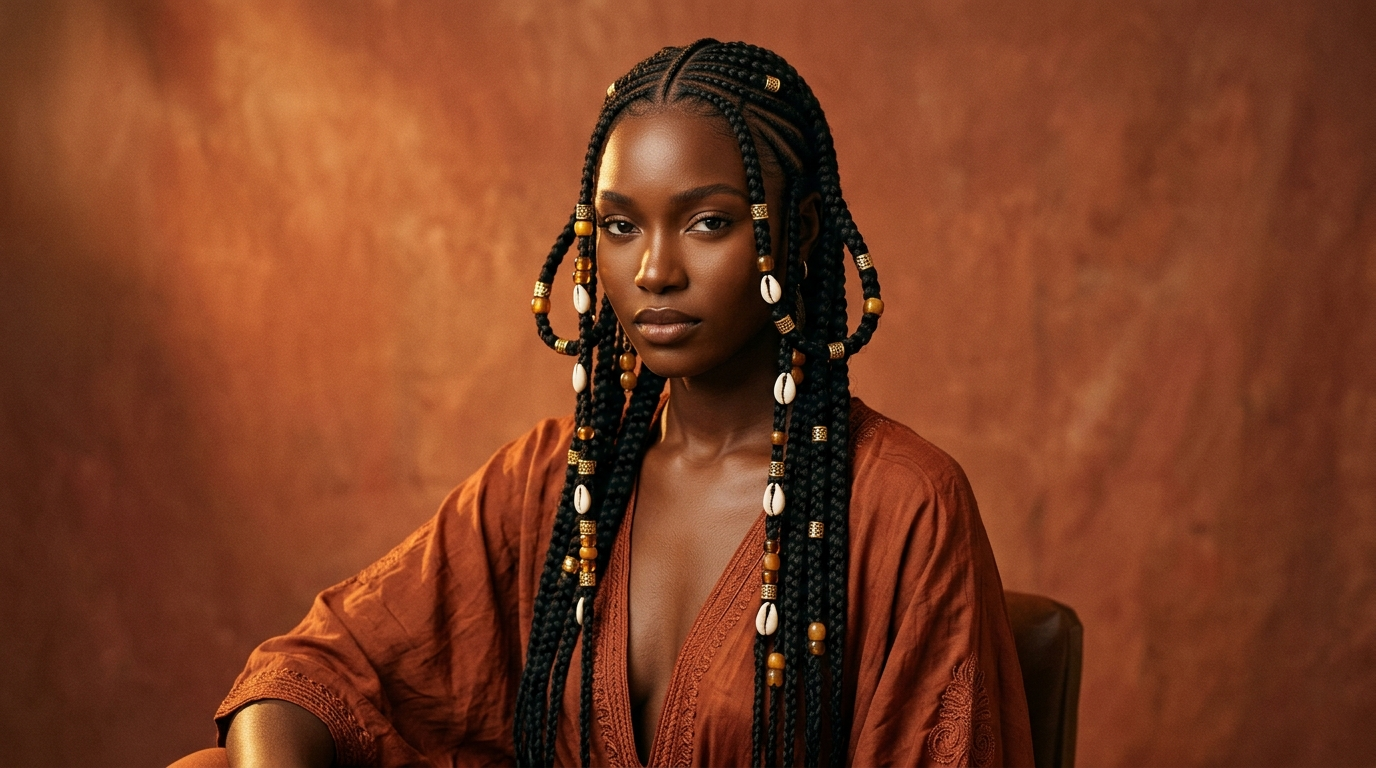
Fulani braids are everywhere right now. From fashion runways in Paris to streets in Antwerp, this stunning protective style has captured the hearts of people worldwide. But Fulani braids are far more than just a trend. They carry centuries of cultural history, identity, and artistry that make them one of the most meaningful styles in African hair culture.
At Braids by Dorine, we are proud to offer authentic Fulani braids at our salon in Antwerp, Belgium. Here is everything you need to know about this iconic style.
Where Did Fulani Braids Come From?
Fulani braids originate with the Fula people (also known as the Fulani or Peul), one of the largest ethnic groups in West Africa with populations spread across Nigeria, Mali, Guinea, Senegal, Cameroon, and beyond. The Fula people are traditionally nomadic pastoralists, and their hair has always been a central expression of identity, beauty, and social status.
Traditional Fulani hairstyles are characterized by a central braid or cornrow running from the front to the back of the head, braids that loop around the ears or hang at the sides, and decorative elements including beads, cowrie shells, and metal cuffs or rings. Each element of the style carried cultural and social significance, indicating age, marital status, and community affiliation.
What Do Fulani Braids Look Like?
The classic Fulani braid style features a center-parted cornrow running along the middle of the scalp, additional cornrows or braids going back at the sides, braided or twisted sections that hang freely at the front near the temples, and decorations such as beads, cuffs, or shells woven into the braids.
Modern interpretations of Fulani braids often incorporate long hanging braids, colorful beads, and variations on the traditional layout while staying true to the core aesthetic of the style.
Why Are Fulani Braids So Popular in 2025?
Fulani braids have experienced a massive global resurgence and for very good reasons:
- They are versatile and work beautifully for casual wear, formal events, and weddings
- They are protective and keep natural hair safe from daily manipulation and environmental stress
- They are deeply rooted in African heritage at a time when people around the world are embracing and celebrating Black culture
- They are photogenic and social media-friendly, making them incredibly popular on Instagram, TikTok, and Pinterest
- They suit all face shapes and can be customized in dozens of ways
How Long Do Fulani Braids Last?
With proper care, Fulani braids last between 4 and 6 weeks. The key is to keep your scalp moisturized, sleep with a satin bonnet or on a satin pillowcase, and avoid excessive manipulation.
How Are Fulani Braids Different from Regular Cornrows?
While Fulani braids incorporate cornrows as part of the style, they are distinctly different because of the hanging braids at the sides and front, the characteristic center braid, and the traditional decorative elements. Cornrows alone are flat braids stitched to the scalp in various patterns. Fulani braids are a complete culturally-rooted style with a specific structure and aesthetic.
Book Your Fulani Braids in Antwerp Today
Our skilled braiders at Braids by Dorine create authentic, stunning Fulani braid styles tailored to your face shape and personal taste.
Contact us: +32 470 532 289 | Info@braidsbydorine.store
Browse our gallery at www.braidsbydorine.store
Leave a Reply